From the Night Signpost to Color of Your Day
This service was not called Color of Your Day from the start. This note is the story of how it found its name.
A night signpost, then another
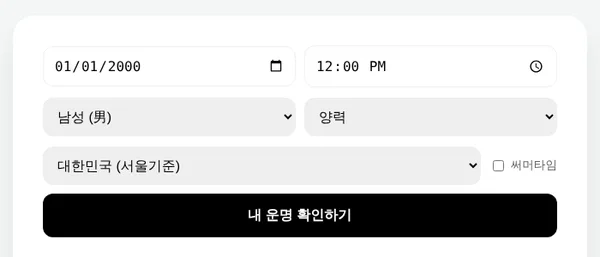
The very first file had no name. It was a calculating screen titled "card-style ten-thousand-year calendar," and its button read "Check my destiny." The first time I gave it a name was on a separate intro screen: "밤의 이정표" in Korean, a night milestone, and in English Your Celestial Signpost. When the intro and the calendar were merged into one screen, the Korean name became "밤의 안내판," a night signboard, and the English stayed The Celestial Signpost.
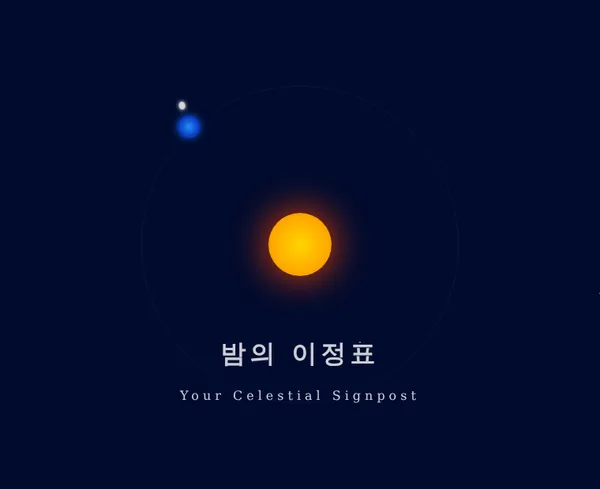
I named it hoping it would be a simple but useful signboard, one from which you could check where you stand right now, your coordinates, in a universe like a deep-blue night sky. From then on, all the way through making it, every design document and every code file began with that name.
Once it was up on Cloudflare, the time came to settle on a real address. The first questions I wrestled with were these. How should I put into words the "event" of one person's life beginning on this planet? How do happening and event differ? How do fate and destiny feel to people in the cultures of the actual users? I wanted astronomy to come to mind and astrology to stay at a distance, so which side would saju, Korean Four Pillars astrology, sound closer to?
I jotted down The Path of Fate, Cosmic Sequence and The Celestial Log, and gave serious thought to BirthCode.com and FateCode.com.
A name with fewer flaws
BirthCode.com was already sold, and was up on the resale market at a steep price. What bothered me more was the word code. It suggested decoding a hidden answer, and so it sat easily beside light fortune products that promise to unlock wealth or grant wishes. It was the exact opposite of my original idea: reading calmly by the order of nature instead of frightening people.
After that, every word came with its own shadow. Grain, which sounds refined in English-speaking arts and humanities circles, sounded in Northeast Asia like a food distributor. Fate and destiny smelled of old-fashioned fortune-telling in East and West alike, and huge games and anime franchises had already claimed them. I suspected lifepath would sound like career counselling or an insurer, and it turned out to be a registered trademark of a financial product. Every time I thought "this is the one" and searched for the domain, I first had to check how differently the word was already being used across many fields.
Saju as a picture
So I went back to the first idea: to let people feel saju, which has a high barrier to entry but draws curiosity, as a picture. I tried to fit birth information and an image into two syllables, pairing time, date, hour, root, natal, chrono and birth with hue, tint, color, glow, ink, print, art and graph.
Of those, birthgraph.art was free. I had swapped natal for birth to avoid the astrologer's natal chart, only to find that birth chart is exactly the astrologer's word in English. Six of one, half a dozen of the other. On top of that, while reading graph with a "ph," my fingers kept typing "gh," and my eyes were fooled too.
With hourgrain I hoped the silent h would let it be heard as our grain, "our grain" in the sense of who we are. But to English speakers it seemed likely to suggest an organic cereal company, or an organic grocery, first. The word grain stayed not in the name but on the screen, in "Inner Grain."
And so I went from fatecode, by way of grainpath, to daygraph. It felt like hunting for pretty stones and shells to make a necklace while my hands went wrinkled in the water. Fate dropped out of the name, and the celestial of The Celestial Signpost went with it, being astrology's vocabulary too. "Saju picture" would be a subtitle, not the name.
Color of Your Day
The last candidate was daycolor. The first idea had been to let people feel it intuitively as a picture, as if adding colour, so color points straight back to where it started. The early registration price of daycolor.art was welcome, but how much it might climb at renewal weighed on me. As for an address with a hyphen, the AI objected so strongly, saying people drop off badly when such an address is passed on by word of mouth, that I wondered whether it had ever pushed back on me like that before.
Then I found daycolor.day. The price stayed the same at renewal, and there was no hyphen and no plural. It is a service you reopen like a weather app to see the day's hexagram, so the day at the end would underline the name once more, we told ourselves, meeting each other halfway, and I bought it.
Only after buying the address did I take "밤의 안내판" down from the first screen. The Korean screen now reads "그날의 그림 · 당신의 사주그림," the picture of that day and your saju picture, and the English screen reads "Color of Your Day · The day you began, in color."
The name's centre of gravity moved from "destiny" to "the colours and pictures of that day."
Why and how this service was made is set out in About daycolor and How it works; the words that appear on screen are in the Glossary.
Open daycolor →